
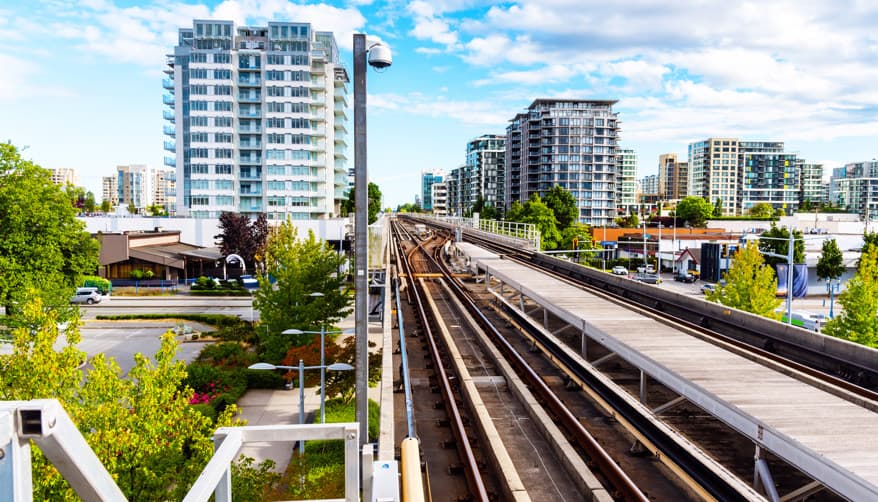
California SB 79: A New Framework for Transit-Oriented Housing
California Senate Bill 79, the Abundant and Affordable Homes Near Transit Act, introduces a statewide zoning framework that enables mid-rise residential development near major transit stops. The legislation establishes clear, tiered standards for height, density, and floor area ratios, while overriding restrictive local limits within designated transit areas. SB 79 is designed to align housing growth with existing infrastructure, reduce car dependence, and expand supply in high-opportunity neighborhoods. By standardizing entitlements across qualifying corridors, the law provides developers and investors with greater clarity, predictability, and the potential for value creation around transit-oriented locations.
This insight report examines the statewide framework created under SB 79 and its implications for entitlement, feasibility, and investment. Featuring Los Angeles as a case study, the report illustrates how local implementation could reshape land use patterns along key Metro corridors, including the B, D, A, E, and K lines. As the policy takes effect in mid-2026, SB 79 is expected to drive renewed interest in infill development, strengthen collaboration between cities and transit agencies, and advance the next generation of sustainable, transit-connected communities across California.
Related Insight(s)

Las Vegas Office Market Report Q4 2024
After four consecutive quarters of increasing vacancy, Southern Nevada’s office market vacancy decreased to 11.8% this quarter. No new office projects were completed in Q4 2024, and net absorption rebounded to 126,238 square feet, the market’s highest net absorption since the second quarter of 2023. In addition, the weighted average asking rental rate for office space increased to $2.68 PSF FSG.

Portland Metro Office Market Report Q4 2024
The greater Portland office market faced continued challenges in Q4 2024. During the quarter, tenants vacated more than 262,000 square feet, bringing the overall vacancy rate to 24.4%. While the market-wide vacancy rate has increased by more than three percentage points in the last 12 months, Q4 marks the third consecutive quarter in which the pace that vacant space has come back to the market has slowed. Vacancy rates remain the highest in the Central Business District (CBD) at 34.7%. In the whole of 2024, net absorption surpassed negative 1 million square feet in the CBD. In the CBD Perimeter, vacancy rates fell by 40 basis points to 27%. Most notably, the Clark County submarket experienced a second consecutive quarter of positive net absorption, driving the vacancy rate to 8.3%.

Santa Monica 2029: Entitlement Clarity, Zoning Upside, and a Reset Housing Market
Santa Monica is no longer the entitlement dead zone it once was. Backed by aggressive state housing mandates, the city has rezoned key corridors, opened up density, and created real paths to multifamily scale. This report breaks down where the growth is going, how zoning has shifted, and what it means for developers, builders, and investors looking to get ahead of the next wave of housing in one of California’s most supply-constrained coastal markets.